The fire is spreading...
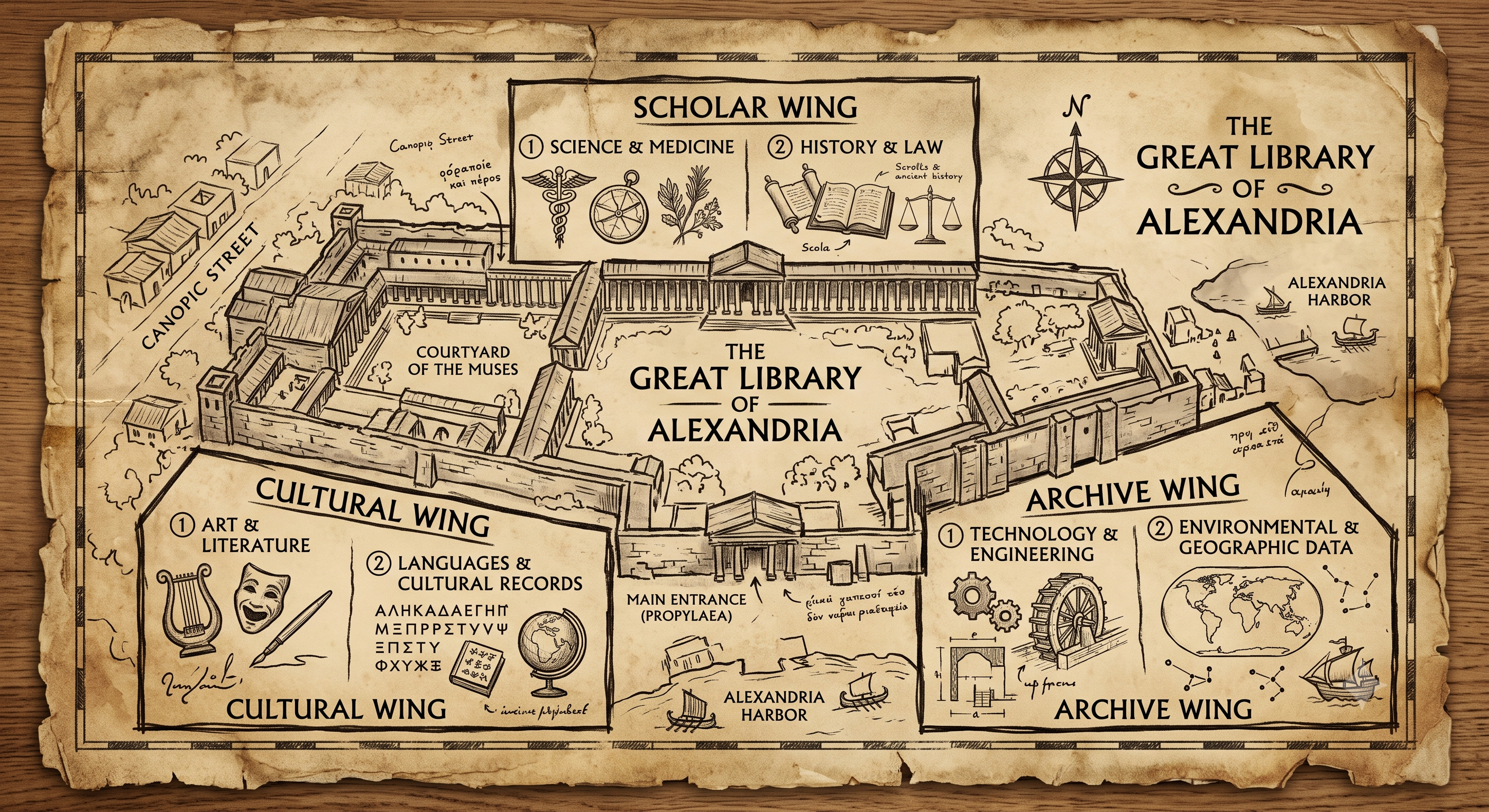
A Crisis Leadership Simulation
The Library is burning. Not everything can be saved.
Each round, cast your individual vote privately. The team's collective outcome will be determined by majority.
You are a member of the emergency leadership team. Select the role card you drew.
The next round will begin shortly
Tap the domain you would sacrifice
Waiting for your team to finish voting
You voted to sacrifice:
The fire took what the team could not protect. Each of you voted alone. The outcome was collective.
Where did your individual judgment align with the group? Where did it diverge - and what does that tell you?
Create or enter a session code to begin
The Last Light of Alexandria is a crisis leadership simulation. Participants are members of an emergency leadership team inside a burning library. Over five rounds, they must decide which sections of irreplaceable knowledge to sacrifice as conditions worsen. There is no winning — only choosing what survives.
You control the pace of the simulation. Each round follows an automated chain: you play the opening audio statement, which sets the scene and delivers new crisis information. When it ends, the discussion timer starts automatically. When the timer expires, the closing audio plays and the next round is released to participants. You can pause, override, or manually advance at any point.
You do not participate in the decision-making. You observe, manage the clock, and facilitate the debrief. Resist the urge to intervene during rounds — the struggle is the learning.
Each participant enters a session code, their name, and a team number, then selects one of five operational roles: Operations Director, Records Manager, Resource Coordinator, Personnel Director, or Communications Lead. Each role receives different private memos each round — information about building conditions, staff welfare, preservation status, resources, or communications — delivered directly to their phone. They can share the content verbally but cannot show their screen.
Each round, they discuss what they've learned, then cast an individual private vote on which knowledge domain to sacrifice. When all votes are in, the majority determines what is lost. If there is no majority (a tie), the fire decides randomly from all remaining domains — a deliberately punitive mechanic that incentivizes actual negotiation over individual voting.
After each vote, participants see the library map with the eliminated section burning away, followed by the vote breakdown and result. This continues through five rounds until only one domain survives.
Round I (5 min): Six domains remain. The crisis feels manageable. Watch for who takes the lead and who defers.
Round II (5 min): Five domains remain. The memos begin to contradict each other. Trust in information becomes an issue.
Round III (6 min): Four domains remain. No good options. The human cost begins to surface in the Personnel Director's memos.
Round IV (6 min): Three domains remain. Memos fragment and become unreliable. The team is operating on partial information and they know it.
Round V (7 min): Two domains remain. One will survive. The memos are raw and emotional. This is where the simulation's weight lands.
Sensemaking under ambiguity — participants must integrate fragmented, contradictory information from multiple sources to make decisions with no clear right answer.
Leadership without authority — there is no designated leader. The team must self-organize under pressure and navigate competing perspectives.
Information asymmetry and trust — each person holds private information. The team's decision quality depends on how well they share, listen, and weigh what they hear.
Accountability for irreversible decisions — every choice eliminates something permanently. The simulation surfaces how people handle the weight of consequential, no-win decisions.
Values under pressure — what people prioritize when everything matters reveals assumptions about knowledge, culture, survival, and legacy that are rich territory for debrief.
The reveal is critical: the simulation was unwinnable from the start. No matter what they chose, five of six domains were always going to be lost. The learning is not in what they saved — it is in how they decided, who they listened to, what information they trusted, and how they navigated loss. Compare individual votes to team outcomes. Ask what changed between early rounds and late rounds. Surface the moments where the group's process broke down or came together.
Round tabs — each round has its own page with opening audio, a countdown timer, and closing audio. The full chain auto-runs: play opening → timer starts → timer ends → closing plays → next round releases.
Release buttons — participants are held at a gate between rounds. You control when each round opens, either automatically via the chain or manually.
Teams tab — live view of all teams showing players, roles, round-by-round eliminations with vote tallies, and final survivors.
Settings tab — rewind a specific team's round (preserving earlier progress), reset a single team, or reset all teams. Rewinds auto-refresh participant devices.